March 23, 2026
Products
Localized Models Tailored to Languages and Curricula
Personal Menu
Personal Menu
Added to Favorites
In recent years, mathematics and science education has placed increasing emphasis not only on acquiring subject knowledge and calculation skills, but also on developing students’ inquiry skills and problem-solving abilities.
In response to this shift, scientific calculators have evolved beyond their traditional role as calculation devices and are now being used to support deeper and more meaningful learning.
So, how do scientific calculators enhance learning?
Scientific calculators enable students to perform calculations quickly and accurately.
More importantly, they reduce the time and effort spent on routine calculations.
This allows students to focus more on:
• Understanding the problem
• Exploring different approaches to solving it
• Verifying whether their answers are reasonable and correct
Students can focus more on understanding, reasoning, and problem solving, rather than spending time on routine calculations.
As students experiment with different values and compare results, they naturally repeat the cycle of “Think → Try → Verify.” Through these experiences, they strengthen their ability to solve problems independently.
Scientific calculators make it easier to work with real-life data and complex numerical information.
When working with practical data or statistics, students spend less effort on calculations and can focus more on interpreting and understanding the meaning behind the results.
Working with real-life data in this way often encourages:
• Greater interest and engagement in mathematics
• A deeper understanding of real-life phenomena
• New questions and opportunities for inquiry
In this way, mathematics becomes more closely connected to students’ everyday experiences and observations.
Q. Calculate the actual height of a tower.
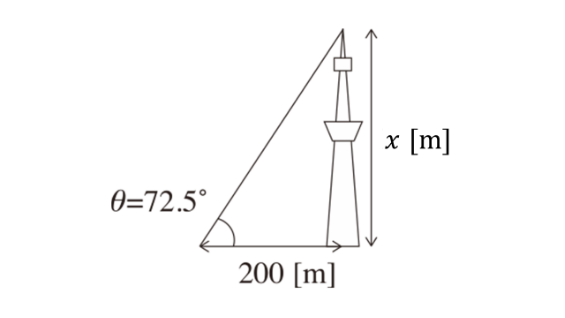
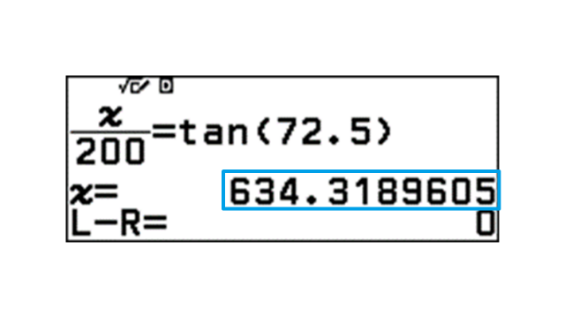
The tower height is 634m.
Q. Calculate the probability of 2 out of x people having the same birthday.

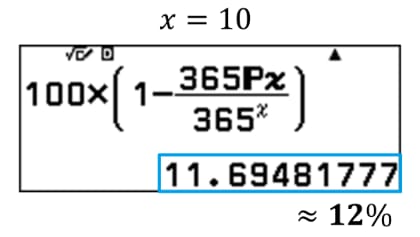
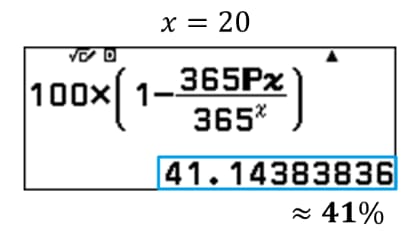
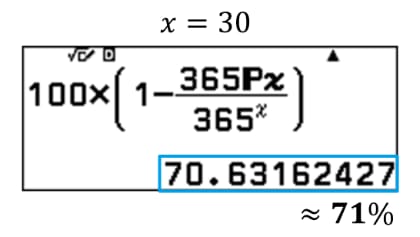
With 30 people, the probability reaches 70%.
Examples of Real-Life Problems
These learning experiences go beyond traditional problem-solving exercises and broaden students’ approaches to learning itself.
The use of scientific calculators is expected to help foster skills that remain valuable throughout life, including:
• Independent thinking
• Problem-solving abilities
• The ability to connect mathematics with real-life situations
These are essential skills for lifelong learning and future success.
The use of scientific calculators is continuing to expand in classroom settings.
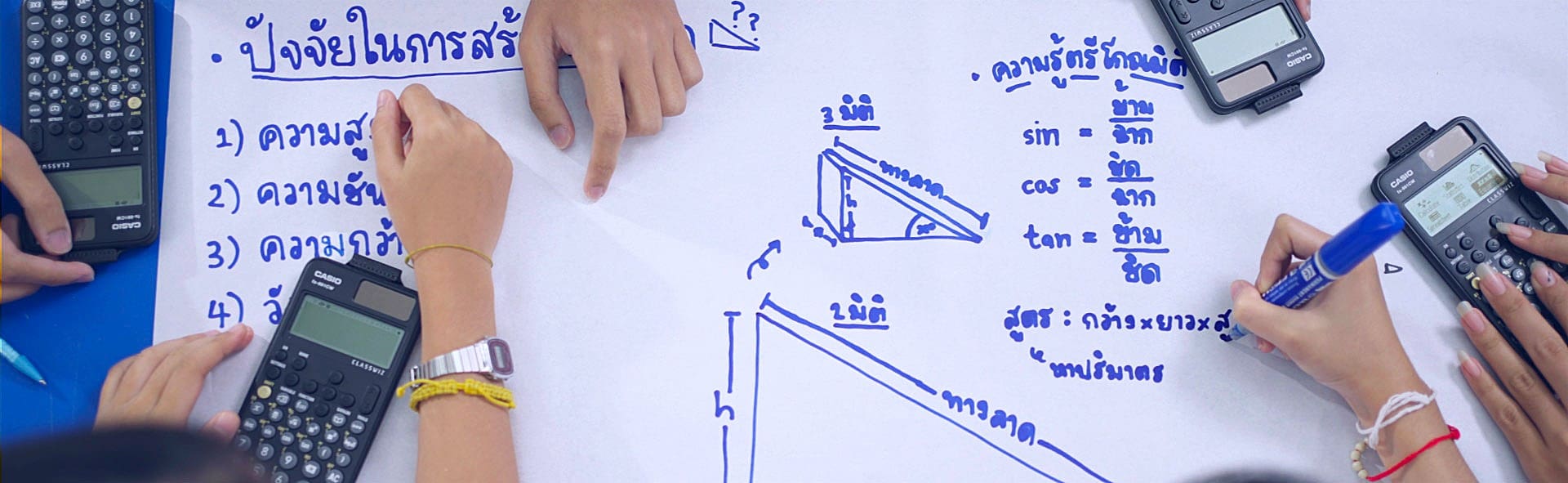
In Thailand, educational initiatives increasingly emphasize inquiry-based learning and real-life problem solving. One example is the DSP (Demonstration School Program), which promotes these approaches in schools.
Under this initiative, CASIO works alongside local educational institutions to support the implementation and continuous improvement of lessons using scientific calculators.
This project goes beyond simply introducing scientific calculators into classrooms. It integrates curriculum development, classroom implementation, and evaluation into a continuous improvement process.
The process begins with the development of teaching materials for classroom use. Participating schools are then selected in collaboration with local educational authorities, followed by training for educators and teachers.
Following this preparation, students engage in lessons that utilize scientific calculators, while learning outcomes and classroom observations are analyzed to evaluate the effectiveness of the approach.
Through these ongoing efforts, the project continues to evolve, and positive changes have been observed in the way students approach learning and problem solving.
Educators and teachers participating in the DSP (Demonstration School Program) have shared their perspectives on how scientific calculators are influencing classroom teaching and student learning.

The most noticeable benefit of this project has been the change in the classroom atmosphere. Learning has become easier and more enjoyable, and students no longer need to worry excessively about calculations. We have also seen more positive attitudes toward mathematics among students. In addition, collaboration among stakeholders has strengthened efforts to improve education for Thai children, creating opportunities to exchange diverse perspectives and apply them for future educational development.
Mr. Buncha Kao-ian
Saparachinee School, Trang Province
Senior Professional Teacher

I would like to express my appreciation for the DSP, which has enabled students to gain broader access to technology. Scientific calculators are not used merely as tools for numerical computation; they enhance learning effectiveness by promoting deeper understanding of concepts through inquiry-based learning. Students are also able to apply and extend their knowledge to future careers and professional fields, moving beyond the rote memorization of theories and toward more meaningful learning experiences.
Ms. Sudsaijai Kitkrailat
Benjamarachrangsarit School, Chachoengsao Province
Professional Teacher

The Office of the Basic Education Commission (OBEC), in collaboration with CASIO, has been continuously working to enhance the teaching and learning process in mathematics and physics since 2021. The initiative aims to help Thai teachers and students connect mathematical and scientific knowledge with real-life situations through the use of the CLASSWIZ scientific calculator as a tool for Inquiry-Based Learning. Through this approach, we seek to foster analytical thinking, problem-solving skills, and active learning, bringing these educational goals into practical classroom implementation across Thailand.
Mr. Ekkasit Piyasangthong
Director, Educational Development Group for Gifted Students
Bureau of Academic Affairs and Educational Standards
Office of the Basic Education Commission (OBEC)
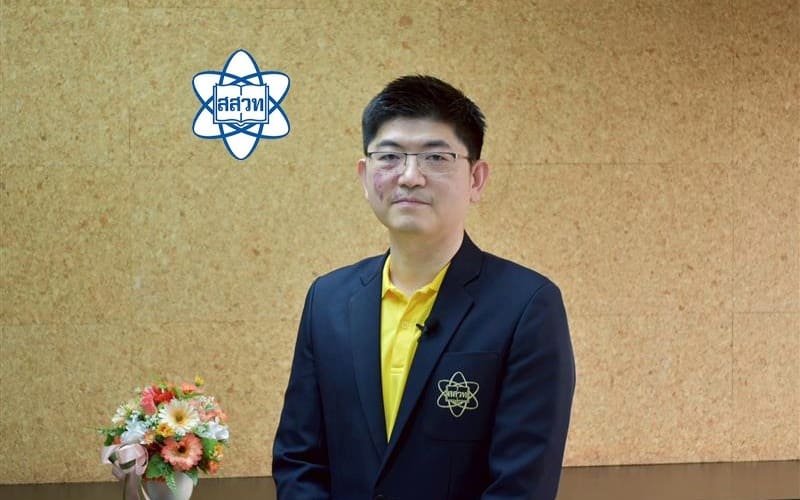
Mathematics and science education today must be adapted to keep pace with a rapidly changing world. An inquiry-based learning approach that incorporates real-life problem situations alongside the use of scientific calculator technology is an important strategy for preparing students, teachers, and educational personnel to respond effectively to these changes.
Associate Professor Dr. Theeradej Jearsuksakul
Director
Institute for the Promotion of Teaching Science and Technology (IPST)
Their feedback suggests that the use of scientific calculators contributes not only to more efficient calculation, but also to improvements in students' attitudes toward learning and overall learning abilities. These positive outcomes have encouraged growing participation from schools and educational institutions.
The learning cycle of “Think → Try → Verify” facilitated by scientific calculators encourages new questions, discoveries, and deeper exploration, helping students take ownership of their learning journey.
CASIO remains committed to supporting learning experiences rooted in curiosity—the starting point of all learning—and will continue promoting initiatives that help expand educational opportunities for students around the world.