October 30, 2026
Products
The Story Behind the Sustainability-Led Design of the fx-85GT CW+ for the UK Market
Personal Menu
Personal Menu
Added to Favorites
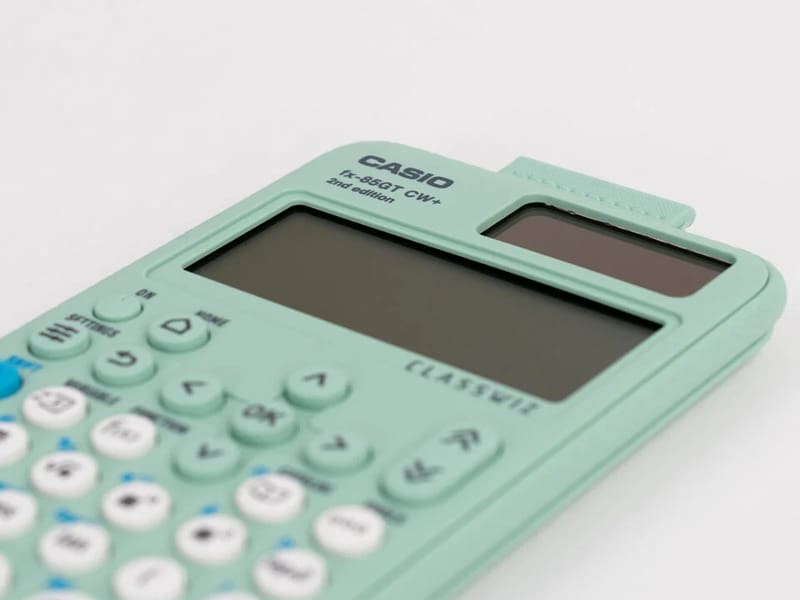
In February 2026, Casio launched the fx-85GT CW+ in the UK market. The calculator features a body made from post-consumer recycled (PCR) plastic sourced from discarded household appliances (90% PCR content in the black model and 45% in the color models). The packaging has also been redesigned to reduce plastic use.
*PCR (Post-Consumer Recycled) plastic is recycled material derived from used consumer products and household appliances.

Why the UK Market?
We spoke with Daniel Mason, Head of Education Marketing at CASIO UK and a key figure behind the project.
―What was the background to the launch of a sustainable scientific calculator in the UK market?
Consumers in the UK have a strong awareness of environmental issues and tend to favor products that are designed with sustainability in mind. As manufacturers, we are in a position to respond to the needs of users who are looking for environmentally responsible products. As discussions between our headquarters in Tokyo and the UK team progressed on the possibility of bringing a sustainable scientific calculator to the UK market, everyone involved, myself included, shared a strong desire to make it happen. I believe that this collective commitment and enthusiasm were among the key driving forces behind this initiative.
―What is a market with a high level of environmental awareness actually like?
For example, at a large stationery retailer where scientific calculators are sold, approximately one-third of the products on display promote environmental sustainability, and many of these products clearly indicate the percentage of recycled materials used to make them.
―Given those market conditions, I can see why an environmentally conscious model would be positively received.
It has now been more than 6 months since the product was launched, and it has been well received and highly rated by a wide range of customers. Among the more than 100 mathematics teachers who participated in the product evaluation program, approximately 90% gave it a positive assessment. We believe that the product has also contributed to enhancing the Casio brand image.
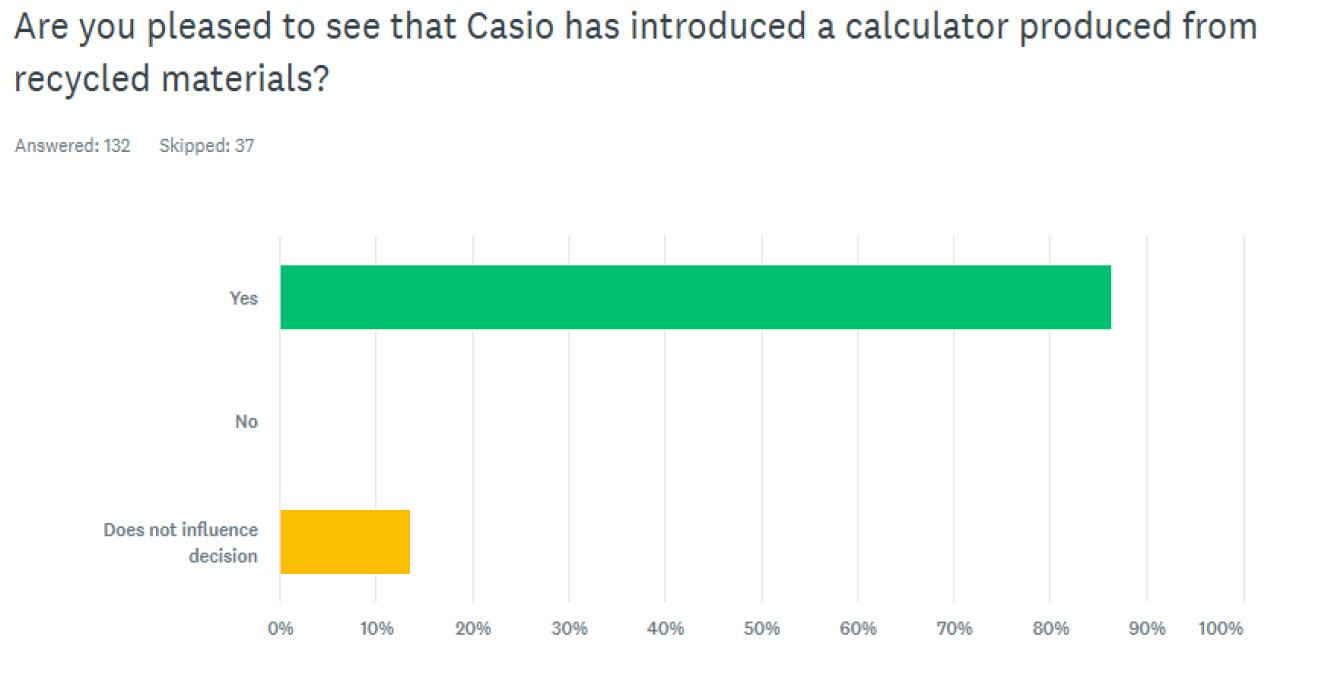
Survey conducted by Casio Electronics Co. Ltd, February 2026.
From Concept to Market: Cross-Functional Collaboration Paved the Way to Success
―It sounds like bringing this product to life required collaboration among people from various countries and regions.
Although this was a project aimed at the UK market, it goes without saying that it could not have been realized by the UK team alone. As this was the first Casio scientific calculator to use PCR materials in its body, there were numerous challenges at every stage, from planning and development through to launch. To overcome these challenges, we had to carefully consider each issue as it arose and seek the cooperation and support of many stakeholders along the way.
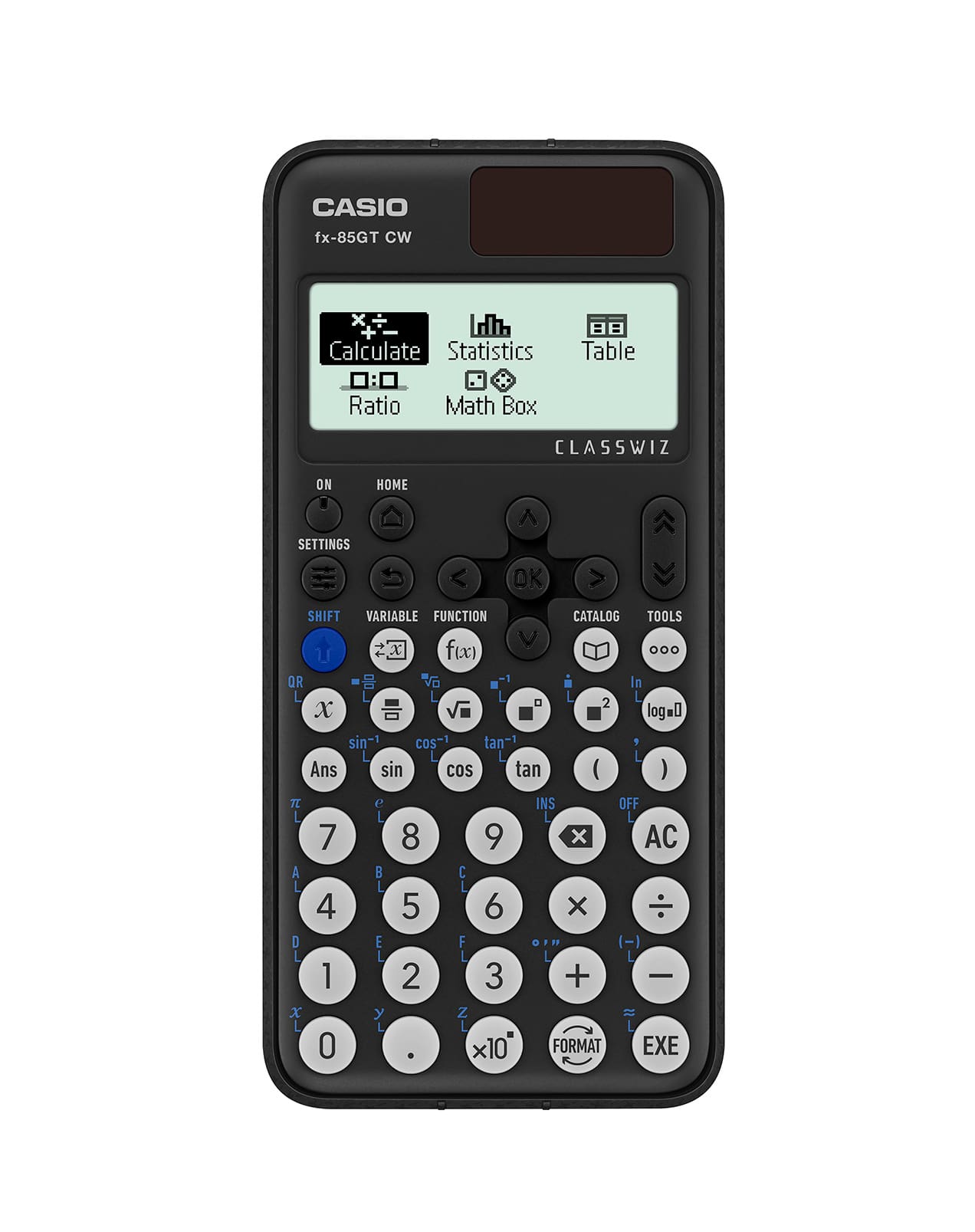
Previous model fx-85GT CW
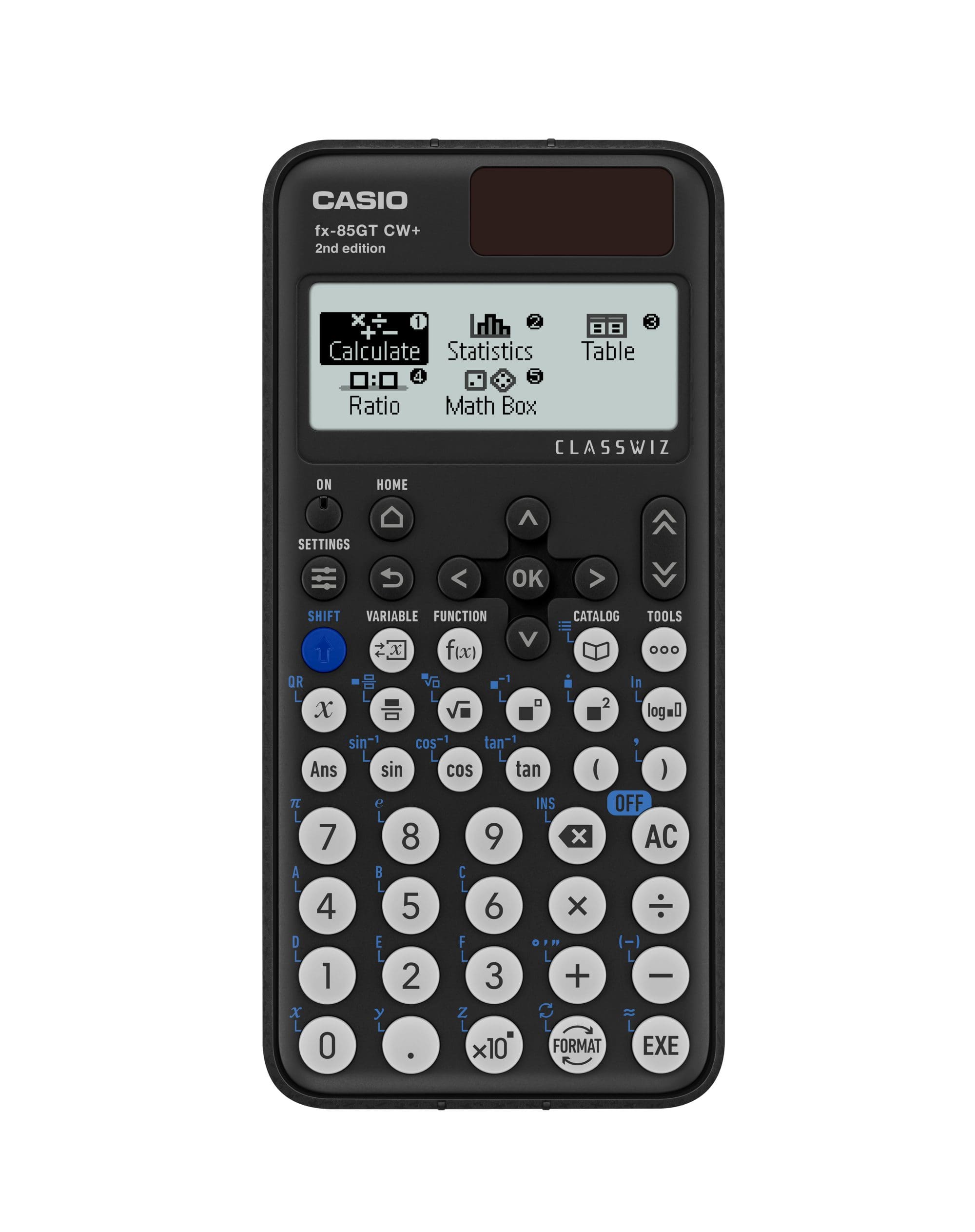
New model fx-85GT CW+
―Were there any challenges in the production process?
Securing the raw materials was one of the biggest challenges. While Casio already offers some standard calculators that use PCR plastic, those products are manufactured in different countries. For this project, we needed to find a new supplier capable of providing PCR materials in the country where our scientific calculators are produced.
Moreover, PCR plastic is not a uniform material. Its properties and quality can vary significantly depending on the source and recycling process. Our procurement team in Japan worked tirelessly to identify and negotiate with suppliers that could meet a wide range of requirements, including quality, cost, and supply stability. Their persistence and dedication were instrumental in making the project a reality.
Balancing Environmental Responsibility and Ease of Use
―Were there any challenges from a design perspective?
Yes. PCR plastic made from discarded household appliances and other recycled products tends to become duller in color as the proportion of recycled content increases. However, scientific calculators are educational tools. The readability of the characters on the body is directly linked to usability and visibility during learning, so this was something we could not compromise on.
At the same time, from an environmental perspective, we wanted to maximize the use of PCR materials as much as possible. As a result, designers, sales teams, developers, and colleagues in the UK held numerous discussions to find the right balance between PCR content, readability, and the overall aesthetic appeal of the product.
We also conducted user research in the UK regarding the calculator’s body colors. Taking those findings into account, we ultimately determined the final product specifications.
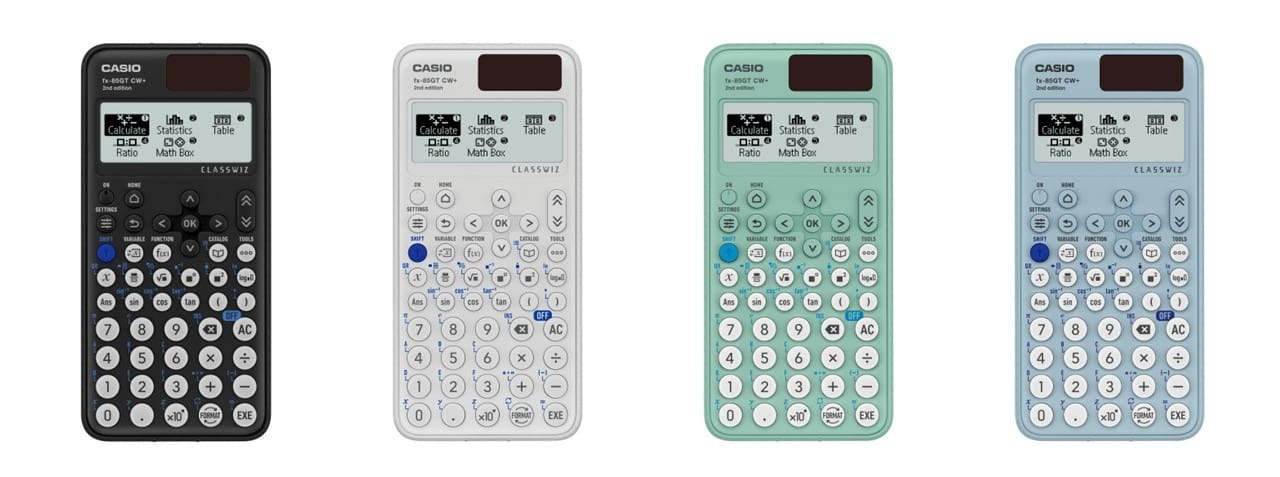
The black model, where discoloration from PCR materials has minimal impact, achieves a PCR content rate of 90%, while the color models contain 45% PCR material. These figures are exceptionally high, even when compared with competing products.
Sustainable Packaging Was Also a Priority
―Were there any other environmental considerations incorporated into the product?
We had already been promoting initiatives to replace plastic outer packaging with paper in order to reduce plastic usage. For this product, we went a step further by adopting a non-woven fabric bag to wrap the calculator, which helped reduce the amount of plastic used compared with previous models.
This idea actually came from a member of our development team at headquarters. It is a good example of how contributions from different departments helped enhance the product’s environmental performance.
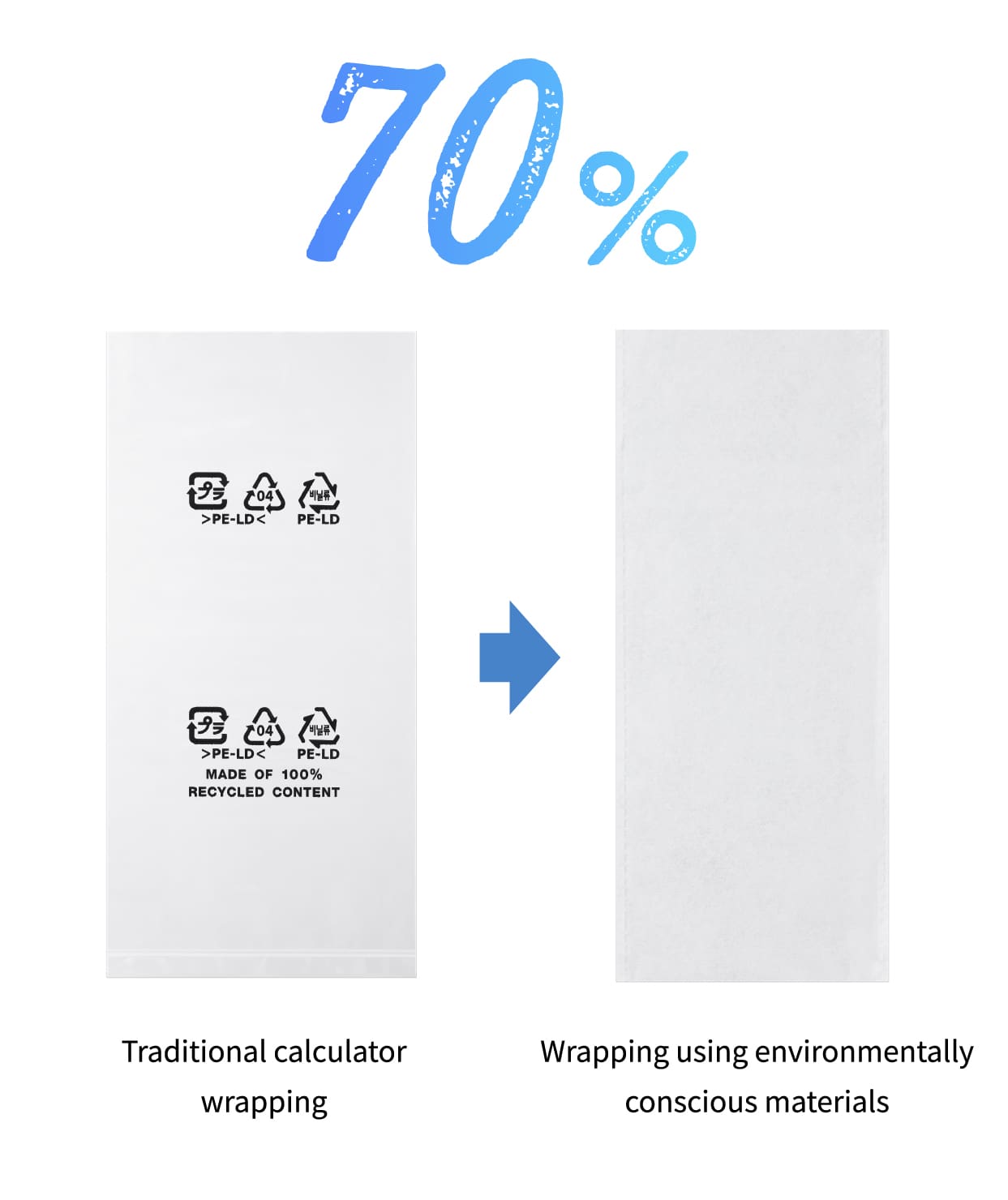
By replacing conventional plastic packaging with a non-woven wrapping bag, plastic use was reduced by 70%. The use of paper-based outer packaging further reduced plastic use by 79% compared with the previous model.
Well Received by the Market and Delivering Tangible Results
―How has the market responded to the product?
Despite introducing the new challenge of using PCR materials, the product has received an even stronger response from the market than we initially expected. We feel that users have understood and appreciated our commitment to environmental sustainability, and that has been extremely encouraging for us.
Looking back, this was truly a project that transcended national and departmental boundaries. It brought together the expertise of many people, including teams in planning, development, design, procurement, and sales at our headquarters, as well as colleagues here in the UK. By combining their knowledge and experience, they turned the concept into a reality.
What united everyone involved was a shared passion for creating a product that would contribute to environmental sustainability and help raise awareness among the next generation. That passion was the driving force behind their efforts throughout the project.
Building on this experience, we hope to continue challenging ourselves and pursuing an even higher standard of what environmentally responsible products can be.
Learn more about CASIO sustainability initiatives (UK website)
https://education.casio.co.uk/sustainability/